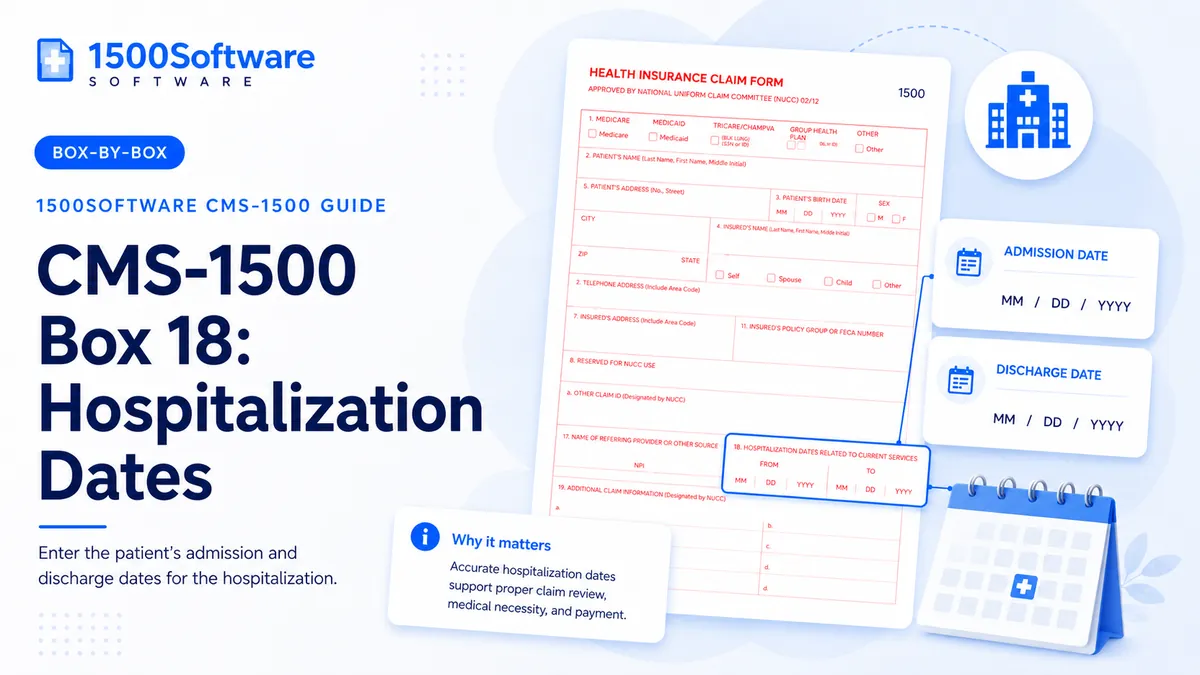
A practical guide to completing Box 18: Hospitalization Dates accurately and consistently.
From our workflow: When reviewing Hospitalization Dates, we look at both the field itself and the related patient, insured, provider, and service-line data. Payers evaluate the claim as a connected record.
Report related inpatient admission and discharge dates when applicable.
An entry for Hospitalization Dates may be the right length and still be the wrong value. The surrounding coverage, provider, and service information has to support it.
Why this deserves a careful check
The payer does not read Hospitalization Dates in isolation. We compare it with the surrounding claim data before deciding the entry is ready.
If Hospitalization Dates fails an edit, verify the source and the payer rule before changing it. A guessed value can move the problem from rejection to denial.
A reliable way to enter the data
- Identify the person, organization, date, code, or identifier the field is asking for.
- Locate the source document: insurance card, eligibility response, clinical note, authorization, provider enrollment record, fee schedule, or payer remittance.
- Enter the value using the form’s structure and the payer’s required format.
- Compare it with related fields and service lines for consistency.
- Save evidence of the source and the final submitted claim.
Mistakes worth catching early
- Using emergency-room arrival times.
- Listing unrelated hospital stays.
- Omitting discharge date when known.
Copying an old claim can save time only after the current facts are verified. Recheck Hospitalization Dates, especially when the payer, provider, or date of service has changed.
Final review
- Confirm the stay relates to the billed service.
- Use documented dates.
- Check payer rules for current inpatient status.
- Compare the completed claim with the clinical and billing record.
- Confirm the receiving address or electronic route.
- Keep a secure copy and proof of submission.
What the software should handle
For Hospitalization Dates, software should catch missing values and obvious conflicts while leaving coverage, coding, and documentation decisions to the user and current payer rules.
Source material
The sources below describe the national form or transaction framework. Check the payer’s current instructions before filing.