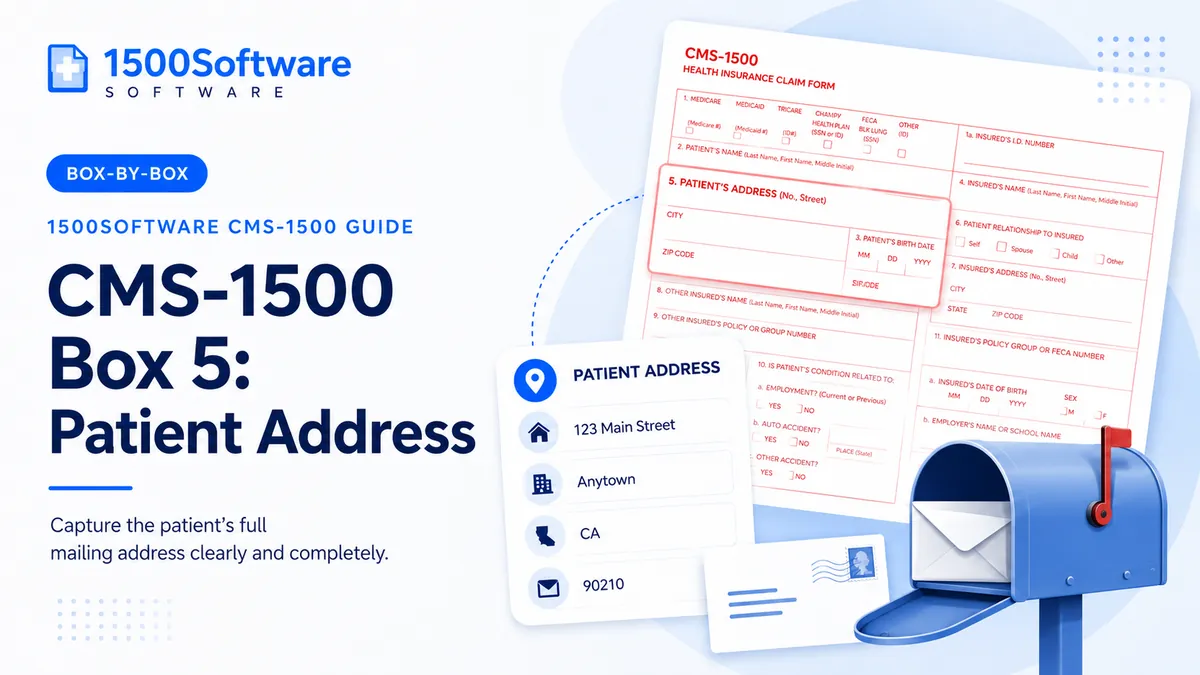
A practical guide to completing Box 5: Patient Address accurately and consistently.
From our workflow: Most avoidable errors with Patient Address begin when a prior claim is treated as the source. We go back to the registration record, insurance card, and current eligibility response before deciding what belongs on the form.
Enter the patient’s mailing address and contact details in the form layout.
An entry for Patient Address may be the right length and still be the wrong value. The surrounding coverage, provider, and service information has to support it.
What can happen when it is wrong
The payer does not read Patient Address in isolation. We compare it with the surrounding claim data before deciding the entry is ready.
If Patient Address fails an edit, verify the source and the payer rule before changing it. A guessed value can move the problem from rejection to denial.
A reliable way to enter the data
- Identify the person, organization, date, code, or identifier the field is asking for.
- Locate the source document: insurance card, eligibility response, clinical note, authorization, provider enrollment record, fee schedule, or payer remittance.
- Enter the value using the form’s structure and the payer’s required format.
- Compare it with related fields and service lines for consistency.
- Save evidence of the source and the final submitted claim.
What commonly goes wrong
- Using the practice address.
- Omitting apartment information.
- Keeping an outdated address after registration changes.
We do not treat the last paid claim as the source for Patient Address. It may contain information that was valid then and is no longer valid now.
A quick check before submission
- Verify at each visit.
- Separate city, state, and ZIP correctly.
- Include apartment/unit.
- Follow payer rules for phone formatting.
- Compare the completed claim with the clinical and billing record.
- Confirm the receiving address or electronic route.
- Keep a secure copy and proof of submission.
What software can check
A dependable program can reuse stable records and flag inconsistent entries for Patient Address. It should not silently guess at information that is absent or uncertain.
Official references
The sources below describe the national form or transaction framework. Check the payer’s current instructions before filing.