A plain-English introduction to the standard paper claim used for many professional healthcare services.
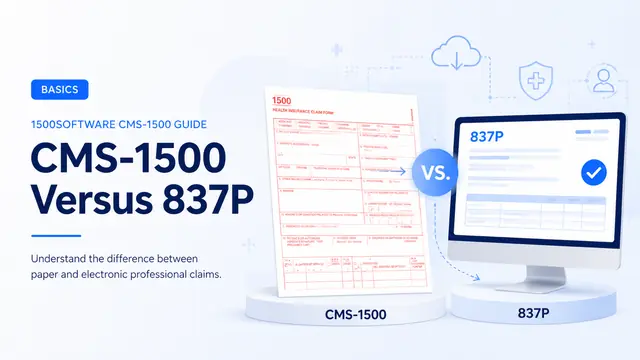
From our workflow: The easiest way to understand What Is the CMS-1500 Claim Form is to follow one claim from the source record to the paper form or 837P file and then to the payer response.
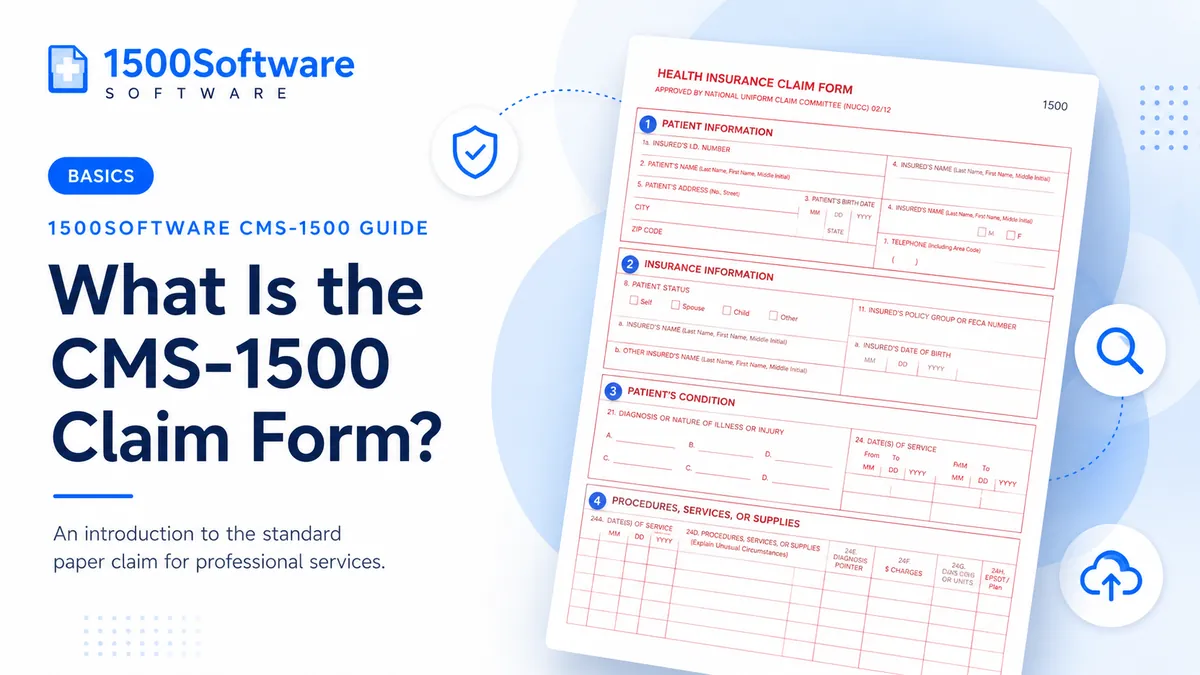
The CMS-1500 is a standardized paper form for reporting professional and supplier claim information. It organizes patient, insured, provider, diagnosis, procedure, charge, and service-location details in a format recognized by many payers.
The form provides a standard place for What Is the CMS-1500 Claim Form, but the payer decides when the field is required and which value is accepted. Use the current payer rule rather than assuming every program handles it the same way.
Why payers care about this value
The payer does not read What Is the CMS-1500 Claim Form in isolation. We compare it with the surrounding claim data before deciding the entry is ready.
If What Is the CMS-1500 Claim Form fails an edit, verify the source and the payer rule before changing it. A guessed value can move the problem from rejection to denial.
How to use this guidance
- Identify the payer and claim type.
- Confirm paper submission is permitted.
- Review the current NUCC instructions and the payer manual.
- Prepare and review the claim using source documents.
- Keep a copy and proof of submission.
Where errors tend to appear
- Treating the form as a universal payer rulebook.
- Using an unofficial image as the submitted form.
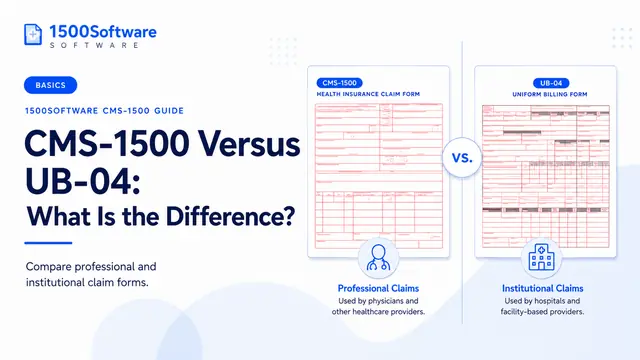
- Confusing professional claims with institutional claims.
Copying an old claim can save time only after the current facts are verified. Recheck What Is the CMS-1500 Claim Form, especially when the payer, provider, or date of service has changed.
Before the claim leaves your office
- Confirm the payer accepts paper.
- Use the current approved form.
- Verify payer-specific completion instructions.
- Keep a legible copy of what was submitted.
- Compare the completed claim with the clinical and billing record.
- Confirm the receiving address or electronic route.
- Keep a secure copy and proof of submission.
Using software without skipping review
A dependable program can reuse stable records and flag inconsistent entries for What Is the CMS-1500 Claim Form. It should not silently guess at information that is absent or uncertain.
Official references
The sources below describe the national form or transaction framework. Check the payer’s current instructions before filing.